Expressive Arts Therapy
Some things can’t be reached through words alone. Sometimes the most honest thing you can do is draw it, write it, or let your body show you what your mind is still working out how to say.
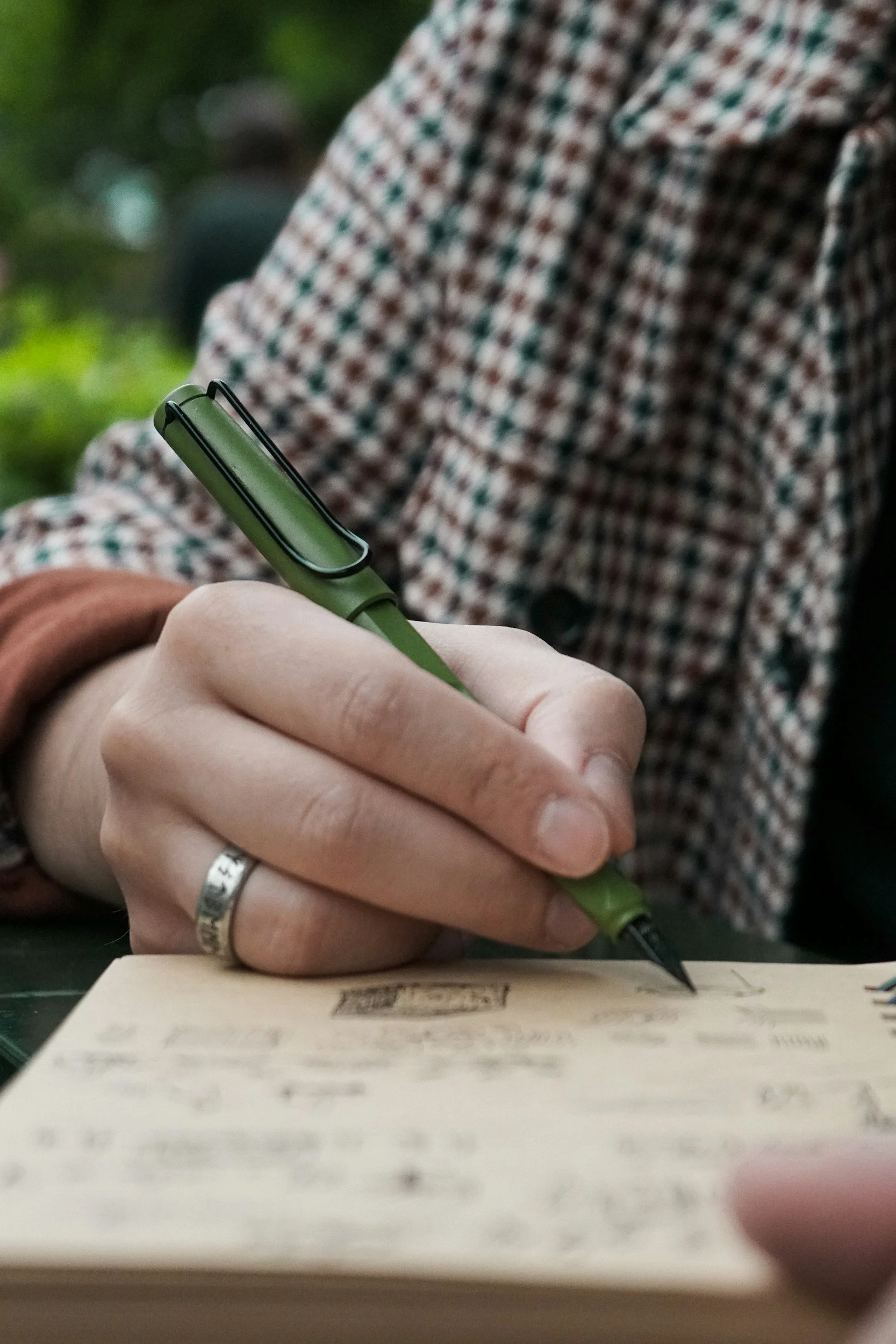
Expressive arts therapy is not art therapy. It doesn’t require artistic ability, creative experience, or any particular relationship with making things. It is simply the practice of using creative process — writing, imagery, movement, visual art — as another way into what you’re carrying. Another door, when the usual ones feel stuck.
For many women, the inner world is rich and complex but hard to access through conversation alone. You can talk about a feeling without ever quite touching it. You can describe a pattern without ever quite moving through it. Expressive arts offers a different kind of contact — one that can reach what words circle around without quite landing on.
What This Looks Like in Our Work
Expressive arts is woven throughout my practice rather than offered as a separate intervention. It arises naturally, when it fits — not as an assignment or a technique, but as an invitation. You will never be pushed toward anything that doesn’t feel right.
In practice, it might look like a writing prompt that asks you to give voice to a part of yourself you’ve been keeping quiet. A drawing that doesn’t have to mean anything but somehow does. A question like: if this feeling were a statue, what would it look like? What posture would it hold? It might look like a guided visualization that takes you somewhere words couldn’t quite get to. Or a moment of movement — not dance, not performance, but something quieter: the body being asked what it knows.
These aren’t exercises. They’re invitations into a different kind of attention. And for many women, they open something that has been waiting a long time to be opened.
Who This Is For
Expressive arts tends to resonate most with women who have a sense that their inner world is richer than what they’ve been able to express in conversation. Who feel like something is there but can’t quite get to it through talking. Who have perhaps been in therapy before and found it useful but incomplete — like they were circling something without landing.
It also tends to be particularly valuable in trauma work, where what has been lived is held in the body and in image rather than in coherent narrative. And in work around self-abandonment and identity — where the question of who you actually are, beneath all the roles and accommodations, is best approached obliquely rather than head-on.
You don’t need to identify as creative. You don’t need to have any relationship with art. You just need to be willing to be curious about what emerges when you approach yourself through a different door.
Frequently Asked Questions about Expressive Arts Therapy
-
Not at all — and this is perhaps the most important thing to say. Expressive arts therapy is not about the quality of what you produce. It’s about the process of making, and what that process reveals. A drawing that ‘isn’t any good’ can hold just as much meaning as a beautiful one. Often more. The inner critic that says you’re not creative enough is itself interesting material for the work.
-
That’s a very common response, and it’s always welcome information. Self-consciousness about being seen — even in something as low-stakes as a drawing — often connects directly to the themes that bring women to this work in the first place. We’d never push past that discomfort. We’d get curious about it.
-
No. Expressive arts is woven into the work when it fits naturally, not applied to every session as a formula. Some sessions are entirely conversational. Others move into creative process when something calls for it. The work follows you, not a curriculum.
-
I earned my master’s degree in expressive arts therapy from Lesley University - the academic birthplace of expressive arts therapy in Cambridge, Massachusetts. I have also received additional training, supervision, and consultation in expressive arts therapy since graduate school and am a member of the International Expressive Arts Therapy Association.
-
Yes. All sessions are held online via a secure, HIPAA-compliant video platform, and expressive arts translates well to the online space. Writing prompts, imagery, visualization, and drawing can all happen within a session from your own environment — which many clients find actually supports a sense of safety and openness.
Begin Expressive Arts Therapy
If something here feels like the right kind of work for where you are, I’d welcome a conversation. I offer a free 20-minute consultation — a quiet, unhurried conversation about what you’re carrying and whether working together feels like the right fit.
There are many ways into yourself. This is simply one more.